On Being a Bestselling Author
You keep using that word. I do not think it means what you think it means...
You might have noticed that many areas of society are organized into hierarchies of one kind or another. Like how someone might be an "Olympian" (the athlete kind, not the deity kind...though I suppose the latter also had a hierarchy).
Within the group of Olympic athletes there are Olympic medalists, and within that group there are Olympic gold medalists, and within that group there are Olympic world record holders, etc…
Depending on where you fall in that hierarchy, you might either have a really good chance of becoming a top-tier high school track coach one day, or you'll have a guaranteed series of sponsorship opportunities with a wide variety of breakfast cereal and apparel companies.
So it shouldn’t come as a surprise that there is also a hierarchy within the realm of people who claim the title bestselling author.
Crazy Rich Authors
At the high end of bestseller rankings, you have people whose writing has made them incredibly wealthy. There are a very, very small number of these people, and you have probably heard of all of them.
These are the J.K. Rowling, Danielle Steel, James Patterson, Stephen King types. These are the authors known even by people who haven't read a book since The Very Hungry Caterpillar.
Newspaper Bestseller Lists
Several bags of gold lower in the hierarchy we have the "Newspaper" bestseller lists. The most popular of these are the New York Times, USA Today, and the Wall Street Journal.
New York Times
The New York Times maintains separate lists for various genres and formats. For example, fiction audiobooks are on a different list than graphic novels, which is important as there is a wide margin of difference between the relative sales of those two groups.
Each NYT list contains the top 10-15 books (depending on category) for a given week, based on the sales from a select group of vendors. Exactly which vendors are included is a closely guarded secret, but it’s well known that Amazon is not one of them.1
The list also has a touch of “editorial oversight”, which some people interpret to mean that if the NYT editors dislike a book, it won’t make the list no matter how many copies it has sold that week.
USA Today
Meanwhile, USA Today lumps everything together into a single list of the top 150 books sold in any given week. Some people say this makes the list more important, as it reflects a book’s true relative popularity, independent of format or genre.2
They also count Amazon sales, which historically was a real benefit to indie authors, as physical retailers tend to carry books from specific distributors, and those distributors don’t usually carry or promote indie books in their catalogues.
The list disappeared around 2022 amidst some staff layoffs,3 then came back the following year. Unfortunately, the new incarnation changed the nature of the list quite a bit. It’s now automated rather than manually curated, and indie books went from making up a large fraction of the list to being a small blip.4
More suspicious indie authors have pointed out that the list also now includes books from major publishers that are several months away from going on sale. This has understandably caused some raised eyebrows within the writing community.5
Wall Street Journal
The Wall Street Journal bestseller list is a bit of a hybrid of the previous two. Its list is broken up into categories (ten entries per category), but it uses BookScan sales numbers,6 which include Amazon sales.
The list also does not use any kind of editorial oversight process.
Lists Within Lists
How people describe bestseller placement in these lists is also broken up into two levels. The top of any category is called a “Number One New York Times Bestseller”. Everything else on the list is referred to simply as a “New York Times Bestseller”.
You rarely hear someone saying "a number twelve New York Times Bestseller!" Just as you never hear someone bragging about coming in eighth at the Olympics. It’s not that it isn’t still an impressive achievement, it just isn’t something people say.
Amazon Bestsellers
The final grouping people discuss within the bestseller world is “Amazon Bestseller”. As the name implies, these rankings include only Amazon sales. The rankings are also highly specific. While the NYT has a list for graphic novels, Amazon has a list for "Post-Apocalyptic Science Fiction Graphic Novels" or "Children's Books about Trains".
The category breakdowns change regularly, and while authors can suggest categories for their books, Amazon ultimately decides which categories to show publicly. As you might imagine, depending on the specificity, some categories are easier to do well in than others.
Another major difference between Amazon and other lists is that Amazon updates its lists every hour. This means a large, short-term surge in sales can push a book into bestseller territory.
Since this is a common thing for a new release, Amazon also has two different lists within their bestseller rankings: "#1 New Release" rankings, and overall "Bestseller" rankings.
My Bestselling Books
All of my bestsellers are Amazon bestsellers. Sometimes it's a category I deliberately chose and am proud to claim, other times it's something Amazon chose seemingly at random, which I ignore.
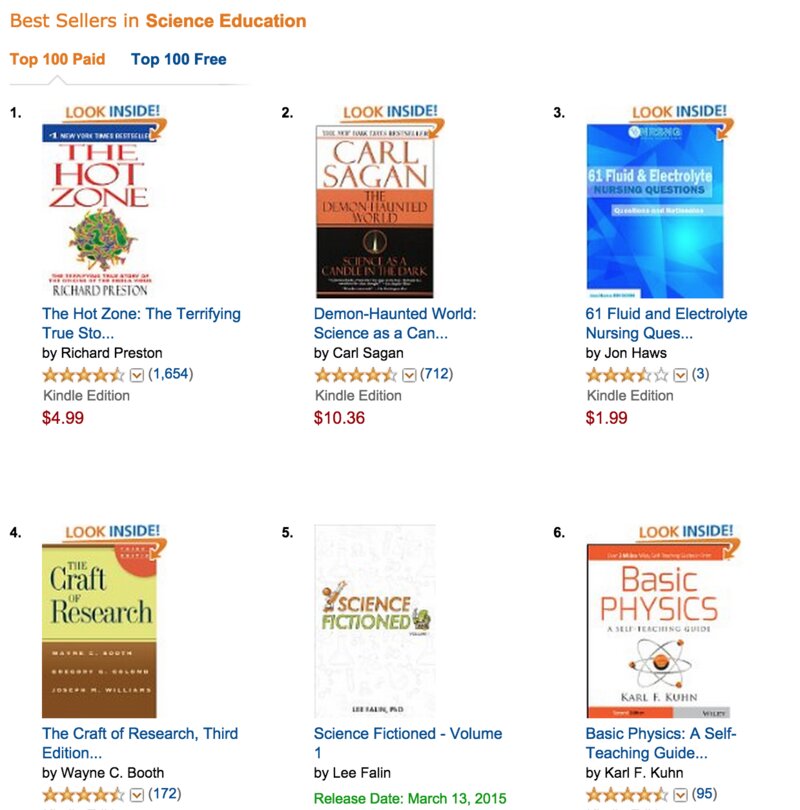
Science Fictioned Volume One hit number five on Amazon's Science Education list shortly after its release:
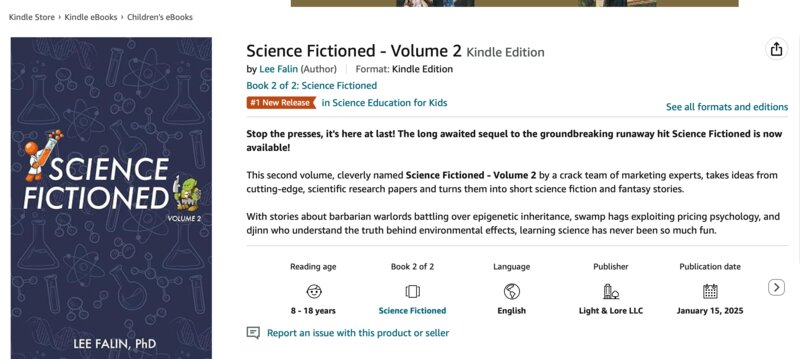
Science Fictioned Volume Two hit number one in Amazon's Science Education and Science Education for Kids categories. It's possible it hit other Amazon lists too, but unlike the NYT and USA Today lists, nobody alerts you to your Amazon rankings. You just have to keep an eye on them.
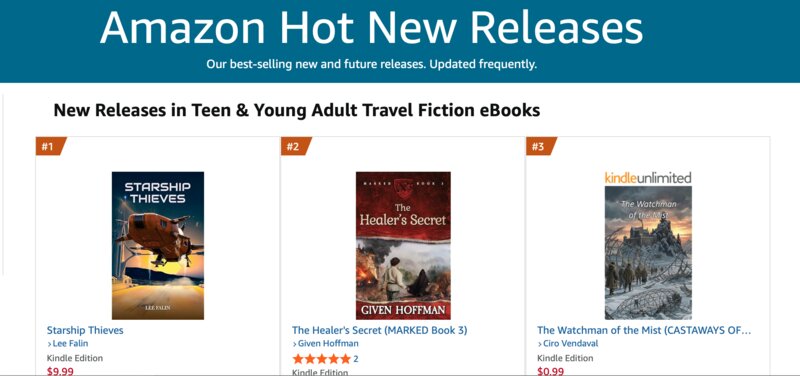
Starship Thieves also hit number one on an Amazon bestseller list, but it was the "Teen's Travel Fiction" list...I mean, they do travel in the book, but it's not exactly something I'd tell people at book signings...
"Oh, do you want a fun-filled travel memoir? Have you considered this book I wrote about kids who plan a heist to steal a spaceship?"
Conclusion
So yes, I am a bestselling author, technically three times, but next time you hear about someone or something being a bestseller, you'll now know a little more about what that means and why the vast majority of bestselling authors aren’t swimming in money.
-
'USA Today' Pauses Bestseller List, Lays Off Presiding Editor ↩
-
The Revamped USA Today Bestseller List Isn’t What It Used to Be | The Hot Sheet ↩
-
BookScan is a sales number aggregation service that many publishers and authors use to track their book sales. ↩
Filed under Writing